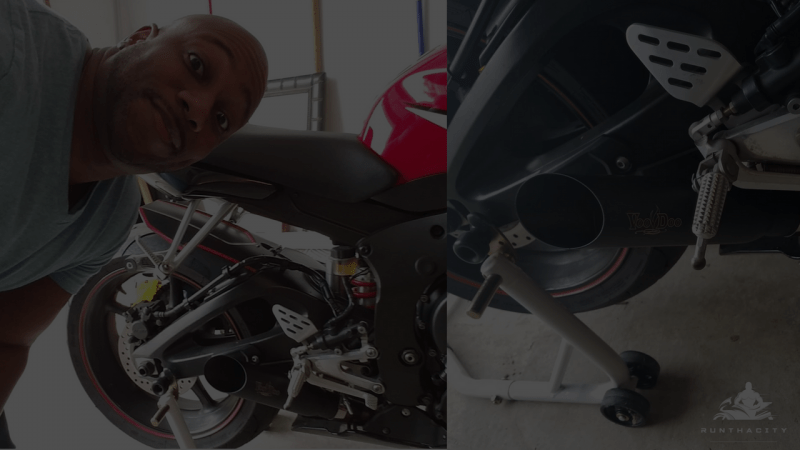
Motorcycles are fun, and have become a bit of an American icon representing free spirits, independence and a fun personality. Who hasn’t, at one time, wanted one, or at least to try riding one?
Well, like with any vehicle, you’re going to have to be trained to ride it, and you’re going to need insurance, as with anything on the road. Insurance is a pain, of course. It’s one of those things you shell out hundreds of dollars a year for, and hope to powers above that you never wind up needing once you have it.
It’s necessary. When you’re on the road traveling at speeds of over sixty miles per hour, accidents can and will eventually happen. Humans make mistakes, and some are, to put it frankly, idiots who just drive or ride carelessly. Insurance protects you from said idiots.
Insurance is a necessary evil, so it’s not free. Before investing in your motorcycle, you should do your due diligence regarding what upkeep of your bike is going to cost you. This includes maintenance, plates, tags, your license and, most importantly of all, said insurance.
So, how expensive is motorcycle insurance? There’s no clear-cut answer to that, because different companies will vary, and more importantly, factors about yourself will directly, linearly impact price in every situation.
Let’s take some time to talk about these. If you see yourself described in any of these with prices you find painful, it may not be time for a motorcycle yet, or some other luxury may have to be given up.
What’s the Difference?
You’re thinking, you have a car, you know what car insurance rates are like, is there honestly a difference between cars and bikes in this regard? And if so, why?
To answer your first question, yes, there’s a significant difference in all regards between cars and bikes, from obtaining the license, to maintaining it, all the way up to insurance. It’s a horse of a very different color.
As for why? Well, all vehicles are inherently, mostly equally dangerous. How they’re dangerous is a big one. Vehicles can be dangerous to their passengers, of course, and often are. Their bigger danger is inflicting that damage on another unsuspecting driver, pedestrian, or other thing they may collide with.
A motorcycle is more dangerous to its rider(s). Hitting anything stationary like walls, polls, buildings or trees in a car is something you stand a decent chance of surviving, as the giant metal box around you absorbs the shock. Doing so on a motorcycle isn’t so pretty.
You could also fall off one of them doing 60, or be hit by one of the idiots we mentioned earlier whom drive negligently. When a four wheel vehicle hits a motorcycle, it usually does damage the car, though often fairly superficially. The motorcycle and its rider(s) enjoy no such luck. Riding a motorcycle requires far more vigilant operation due to this risk, the dangers of larger vehicles, and a plague of drivers who don’t check for motorcycles.
Check for motorcycles, America.
Insurance Pricing
Like we said, due to a lot of variables, there’s no way to predict with one hundred percent certainty what your price would be, even with a lot of criteria, as these prices tend to be calculated at the time by an agent, due to the impact of variables changing from time to time.
Thus, the pricing below is an average, or generality. They’re good enough to ballpark whether or not you have the budget to ride a motorcycle legally.
Cruiser or Touring Motorcycle
- 25-60 yo, Good Driving Record, Liability Only – This going to be the least expensive scenario, as liability is the minimal legal coverage possible, just as with home or car insurance. It’s not hard to qualify for this insurance if you have a clean or at least good driving record. It may be possible to get it cheaper through your car insurance provider, if you’re in good standing with them as a customer. Est. Price: $100-$500/year
- 25-60 yo, Good Driving Record, Full Coverage – Chances are, you’ll want to protect what you love, and that means additional coverage for repairs, replacements, theft and other such concerns, not just covering you legally in an accident. This makes the price go up a good bit, but for this particular customer bracket, less than you might expect. This too may be cheaper through your existing auto insurance provider. You may also cheapen it further via installing approved anti-theft devices, purchasing approved safety gear, and so on. Est. Price: $400-$800/year
- 25-60 yo, Bad Driving Record, Full Coverage – A bad record can really haunt you with insurance. Not only can it be hard to get liability (due to having a record of being one), but the price of the full coverage will be considerably higher. We can’t really even give you a reliable estimate here, because it all depends on which provider you approach, what kind of bad driving record it is that you have, and what kind of mood the agent is in when they quote the price. Suffice it to say, it will be very expensive, possibly unmanageably so, and there aren’t really any lifehacks to make it cheaper. Et. Price: Impossible to guess, but tremendously high!
Crotch Rocket Sports Motorcycle
- 16-24 yo, Good Driving Record, Full Coverage – A 16-year-old probably shouldn’t be on a motorcycle, especially not a crotch rocket of all things. At that age, if motorcycles are something they want to pursue as a hobby or way of life, they should be learning fundamentals on dirt bikes. However, in some states, it is legal under guardianship, and at 18, anyone can legally drive anything if they earn the license to do so. Inexperience (which for motorcycles often takes liability only off the table) raises prices quite a bit, and full coverage is itself quite expensive. Parents might be able to get prices lower if policies give them some of the responsibility, thus lowering the premiums a little, but really, this is just going to be expensive, no matter how you slice it. Est. Price: $900-$1200/year
Are you a long-time rider just seeing if you can find a better price for your motorcycle insurance? Are you someone who’s planning to get into biking? Did these prices make you rethink how interested you were? I’m curious to know, so subscribe to me on YouTube, and let me know somewhere in the comments if these prices are obscene, about what you expected, or quite a bit lower than you feared. Then stick around, if you still want to ride, I’ve got some great content to get you started with one of America’s great hobbies!
You Might also like
-
Motorcycle Basics: Before You Start Riding
Before even hopping on a motorcycle, it’s a smart decision to ride about the mechanics of the machine and familiarize yourself with key concepts. Having an idea in your head is going to come in handy when you’re faced with common beginner problems or later on when you’re on the road.
That’s how you really get a handle on the motorcycle. Let’s get started.Motorcycle Basic Controls
Most motorcycles have the same controls; but you should always check the owner’s manual since the locations and shapes of some features will vary between makes and models.
motorcycle controls indicators and equipment Motorcycle basic parts:
Handlebars
Right side:
- Electric start button – usually yellow or white.
- Engine cut-off switch – above the electric start button. Usually red.
- Above the right throttle is the front brake lever.
Left side:
- Horn
- Indicators (blinkers)
- Choke
- Headlight dip switch (high beams/low)
- Clutch lever.
Between the handlebars, you find the ignition key. Ahead of the handlebars, you will also see the speedometer, odometer, and the tachometer.
motorcycle handlebar controls motorcycle throttle Older Styles and Off-Road Bikes
Here’s some special considerations if you are on an older model or have an off-road bike:
Fuel petcock – these are usually attached to the left near the carburetor. You can lean down to switch the gas tank when the fuel is getting low and you need to get to the gas station ASAP.Kick starter – off-road bikes have kick starters more commonly than street bikes. The kick starter works when you push down on the lever, turning the engine crank and causing the pistons to put pressure against the spark plug. Fuel ignites to start the engine.
What To Check Before Your Ride Every Time
Professional schools throughout the country use the acronym T-CLOCs to help you remember what you should check before heading on your bike. These checks should be done at least once a year, depending on how often you are riding your bike. If you ride every single day, you will have to use T-CLOCs much more often.
- T – Tires
- C – (Main) Controls
- L – Lights & other controls
- O – Oil & other fluids
- C – Chassis
- S – Stands
Tires
Check the air pressure and look at the condition of the tires. Are they worn down? Cracking? What is the condition of the spokes? Do you note any air leakage?
Next, look at the rims, bearings, seals, and casts. Does each brake work as it should? Does the bike fight you when turning or slowing down?
Controls
The main controls include the handlebars, cables, hoses, levels, pedals, and throttle. Make sure the condition of the hoses is good and that everything is properly lubricated. The bars should be straight, and the throttle should move without resistance. Ensure the hoses aren’t cut or leaking. Any bulges, chafing, cracks or fraying of control cables needs to be repaired.
Lights & Other Controls
This includes the battery, wiring, tail and signal lights, switches, blinkers, headlight, and reflectors. Is everything illuminating? Do the blinkers flash right? Is fraying or kinks in the wiring? Are the beams strong enough in the dark?
Oil & Other Fluids
Check the gaskets and seals for any leaks. Ensure the oil level is good, along with other fluid levels. Check for sediment in the coolant reservoir.
Chassis
The chassis is made up of the frame, suspension, chains, belts, and fasteners. Nothing should rattle. Nothing should be frayed, cracking, peeling, or chipping. Ensure that everything is tight and that there is tension in the belts and chains.
Stands
Check for cracks or bends in the stands. Springs should hold their position without looseness.
Basic Mechanics of a Motorcycle
Being that a motorcycle rides on two wheels, it is designed to lean to either side. Through balance and input from the ride, the motorcycle maintains an upright position. Many beginners are afraid that the bike is going to fall over if they lean too far, but that’s not the case. Through the forces of physics, such as friction, momentum, and gravity, it’s nearly impossible for a bike that’s going to straight to fall over.
Engine
Another reason the motorcycle stays upright is the force of the pistons in the engine. These pistons move up and down, creating a force that helps the moving bike maintain it’s upward position.
Tires
The tires of motorcycles are designed to be rounded, ensuring that as the bike rounds a corner, the same surface area of the tire remains on the ground.
Chassis
For the beginner, all you need to know about the chassis is how to sit properly. When positioned properly on the bike, your wrists, knees, and back will be comfortable. You should also be able to engage your core and thigh muscles when using your body to maneuver.
Clutch
Most bikes are manual transmission. The clutch keeps the bike moving but also controls the speed by using friction. Clutches are usually bathed in the same oiled the engine uses, so if you ride the clutch for a while, you won’t cause damage. However, some bikes are different, so refer to the owner’s manual.
Wrapping It Up
For the new rider, your focus should be memorizing where the controls are and what certain parts of the bike do. By learning the general location, you can drive much more safely (and not while staring at the handlebars).
Remember, the everything takes practice. In the same way you learned to ride a bicycle, you need some patience with riding a motorcycle. With that, you’re ready to begin!
Liked this article? Want more beginner’s tips? Subscribe to my YouTube channel to get notifications about the latest videos and never miss out.
-
The Best Stretching Exercises for Sportbike Riders
Riding a sportbike can be an exhilarating experience, offering a sense of freedom and excitement. However, it can also be demanding on the body, particularly on the muscles and joints used most during rides. To ensure both safety and enjoyment while riding, incorporating stretching exercises into your routine is essential. Below, we outline the best stretching exercises specifically designed for sportbike riders, aiming to enhance flexibility, reduce muscle stiffness, and prevent injury.
Key Takeaways
- Stretching improves flexibility and range of motion, essential for comfortable and safe riding.
- Regular stretching can prevent muscle stiffness and soreness, particularly in areas heavily used during rides such as the wrists, shoulders, and legs.
- Incorporating exercise stretch bands can enhance stretching routines, offering resistance that can help improve overall flexibility.
Comparison Table: Stretching vs. No Stretching for Sportbike Riders
Criteria With Stretching Without Stretching Flexibility Improved Decreased Muscle Soreness Reduced Increased Injury Risk Lowered Elevated Riding Comfort Enhanced Compromised Recovery Time Shortened Lengthened Why Stretching is Crucial for Motorcycle Riders
Before delving into the specific exercises, it’s important to understand why stretching is so beneficial for motorcycle riders. Stretching can improve range of motion, decrease the risk of muscle soreness and injuries, and enhance your overall riding experience by keeping the body flexible and prepared for the demands of riding.
Best Stretches for Motorcycle Riding
- Wrist Extensor and Flexor Stretches
- Purpose: Alleviates wrist stiffness and prevents arm pump.
- How to Do: Extend your arm, palm down, and gently pull the fingers towards your body with the other hand. For the flexor stretch, extend your arm, palm up, and pull the fingers towards your body.
- Shoulder and Chest Openers
- Purpose: Opens the chest and shoulders, counteracting the forward-leaning posture.
- How to Do: Interlace your fingers behind your back, straighten your arms, and lift your chest upwards, feeling the stretch in your shoulders and chest.
- Hip Flexor Lunges
- Purpose: Loosens the hip flexors, crucial for maintaining a comfortable riding position.
- How to Do: Step forward into a lunge, keeping the back leg straight and the front leg at a 90-degree angle. Push your hips forward.
- Quadriceps Stretch
- Purpose: Stretches the front thigh muscles, which can become tight from the riding position.
- How to Do: Standing on one leg, pull the other foot towards your buttock, keeping the knees together.
- Seated Hamstring Stretch
- Purpose: Increases flexibility in the back of the legs.
- How to Do: Sit on the ground, extend your legs, and reach towards your toes.
- Glute and Piriformis Stretch
- Purpose: Relieves tightness in the buttocks and lower back.
- How to Do: Sitting on the floor, cross one leg over the other and gently pull the knee towards the opposite shoulder.
Incorporating Stretch Bands for Enhanced Flexibility
Exercise stretch bands can be a valuable tool for motorcycle riders looking to enhance their stretching routine. They provide resistance, increase the effectiveness of stretches, and help improve overall flexibility. Here are a couple of stretches using exercise bands:
- Band-Assisted Hamstring Stretch: Lie on your back, loop a band around your foot, and gently pull back, keeping the leg straight.
- Shoulder Stretch with Band: Hold a stretch band in both hands, lift your arms over your head and behind your back, stretching the shoulders.
FAQs on Stretching for Motorcycle Riding
- How often should I stretch?
- Ideally, before and after each ride to warm up and cool down the muscles.
- Can stretching improve my riding performance?
- Yes, by enhancing flexibility and reducing muscle fatigue.
- Are there stretches to prevent lower back pain from riding?
- Yes, hip flexor stretches and lower back stretches can help alleviate and prevent lower back pain.
- Why is stretching important for motorcycle riders? S
- tretching improves flexibility and reduces the risk of muscle stiffness and injuries, making riding more comfortable and enjoyable.
- How often should I stretch for the best results?
- Ideally, before and after each ride to prepare your muscles for the ride and to aid in recovery afterwards.
- Can stretching help with lower back pain from riding?
- Yes, specific stretches targeting the lower back and hip flexors can alleviate and prevent lower back pain.
- Are exercise stretch bands beneficial for riders?
- Yes, they add resistance to stretches, effectively improving flexibility and strength in key muscle groups.
- What are the best stretches for sportbike riders?
- Wrist, shoulder, hip flexor, quadriceps, hamstring, and glute stretches are highly beneficial.
- How long should each stretch be held?
- Each stretch should be held for at least 30 seconds to maximize its effectiveness.
Conclusion
Incorporating these stretching exercises into your routine can significantly enhance your motorcycle riding experience. Not only do they prepare your body for the ride, but they also help prevent post-ride stiffness and soreness. Remember, consistency is key to seeing improvements in flexibility and to enjoy a more comfortable and enjoyable ride.
For more tips on fitness and motorcycle riding, check out our Fitness Blog at RunTheCity. Whether you’re a seasoned rider or just starting, understanding and practicing these stretches can lead to a healthier, more enjoyable riding experience.
-
Viking Cycle Motorcycle Rain Gear Review
If you’re a biker, you’ve undoubtedly heard of Viking. They’re a leading name in motorcycle gear, making some of the best coats, packs and much more. Did you know they also make the best motorcycle rain gear?
Riding motorcycle in the rain comes with a host of problems, not all of which have to do with road safety. I you live in an area that runs the gamut of climates and weather, and you like to depend on your bike for transportation, you need to be prepared.
When it comes time to buy your motorcycle rain suit, you want the best motorcycle rain gear you can get, and unsurprisingly, that’s going to come from Viking – who else?
What is Motorcycle Rain Gear?
Rain gear for motorcycle riding consists of one or two components – at least a jacket/top, and often, a pair of easily-removed pants. The material used is water-resistant, often nylon or poly-synthetic in nature, capable of sloughing off the built up water, and helping to fight the cold, damp wind you’ll be plowing into at high speed.
Not all rain gear for motorcycle riding is made equally, and Viking, already known for their excellent jackets, pants and packs, have combined art and material sciences to produce the best rain suit for motorcycle riders that money can buy.
Not only will it keep you warm and dry, but it’s remarkably easy to clean – count on mud and dirty tar-laden water splashing on you if you’re interested in riding motorcycle in rain.
Is it Lame to Wear Rain Gear on a Motorcycle?
You like to be respected by your fellow bikers, and there’s nothing wrong with that. If you’re going to ride, you want to ride in style and comfort. This has led some motorcycle riders to leave rain gear for motorcycle riding out of their repertoire in the past.
However, there is nothing lame or uncool about rain gear – the dirty water flying up off the road, and the rain itself, will ruin a leather jacket or a good pair of pants, and the high wind can result in you catching a cold, or even the flu or pneumonia.
Besides, the best motorcycle rain suit designs are quite stylish, matching any rider’s taste in bike and in the rest of their ensemble.
You don’t want to arrive at your destination soaking wet, as wet clothes is one of the most uncomfortable things one can imagine. On a colder, rainier day, you can become very ill if you allow yourself to get wet like this, and the wind will chew right through you as well.
Safety on a motorcycle isn’t just about riding properly and wearing your helmet. It’s about protecting your whole body from the elements, and that includes rain.
OVERVIEW
Viking Cycle Rain Gear offers you the freedom and comfort of movement for every biker’s needs in heavy rainy weather. The color options are bright for stronger visibility, along with reflective striping on the jacket to make sure you get to and from each destination safe and sound. Soft polyester outer shell with PVC packaging; our jacket has a Full-Length Zipper with a Velcro Strom Flap as well. In addition, we’ve added a head shield on the calf for added comfort and safe riding.
Ride through the rain while keeping yourself warm and dry by using these quality rain suits. While using this Viking Cycle Rain Suit you’ll be able to ride during heavy rain while knowing that your leathers under the rain suit will stay nice and dry. This rain suit has built-in reflective fabric on the pants and jacket to give you better night time visibility, keeping you dry and safe while you ride during bad weather.
What is the Best Motorcycle Rain Gear?
Viking’s rain suit for motorcycle riders is a top of the line, two-piece design. The stylish exterior is made of the latest in hydrophobic materials, sloughing off water, even gritty, muddy water from the road. The adjustable sleeves and collar of the jacket make it a one-size-fits-all solution that anyone with anybody build can wear comfortably and with pride.
The pants fasten to the jacket easily, creating a complete seal against the elements. With Velcro, it can easily be adjusted while providing a snug, closed fit that will never jam, rust or corrode.
The advanced material also breathes, with an advanced two-way thermal lining that can keep heat in against the cold, while also allowing breathing so summer rains don’t cook you in your own sweat and heat.
With an attractive gray/black style, it provides a timeless look that’s anything but lame or unfashionable, matching any bike, and any rider, be they young or old. If you’re interested in riding a motorcycle in rain, this is definitely the gear for you. Now you can enjoy those cross-country rides and be prepared for any weather this beautiful country can throw at you, and know you’ll arrive safe, dry, and feeling just fine.
To learn more about Viking’s other awesome biking gear, or about riding a motorcycle in the rain safely, subscribe to my YouTube channel today. I have some awesome things I want to show you, and this is just a taste!
TECHNOLOGY
Viking Cycle’s Rain Gear Fabric is a 100% 600D Polyester coated by PU (polyurethane). The 600D Polyester coated by PU, is also wind and water resistant so it will provide great protection against cold wind and rain and it will not sag and creates less wrinkle overtime. The fabric is light weight but highly resilient against abrasions to provide more resistance between the body and the road for your protection, and also stands against wear and tear for product durability.


2 comments on What Is the Average Cost of Motorcycle Insurance?